
By Ray A. Groq · Editorial review: Julio C. Sandria Reynoso
Leer este artículo en español →
Imagine a robot that can work all day without recharging, with a battery so safe and dense it seems taken from a science-fiction movie. Solid-state batteries are approaching that reality, and robotics is playing a key role in bringing them to our factories, homes and streets.
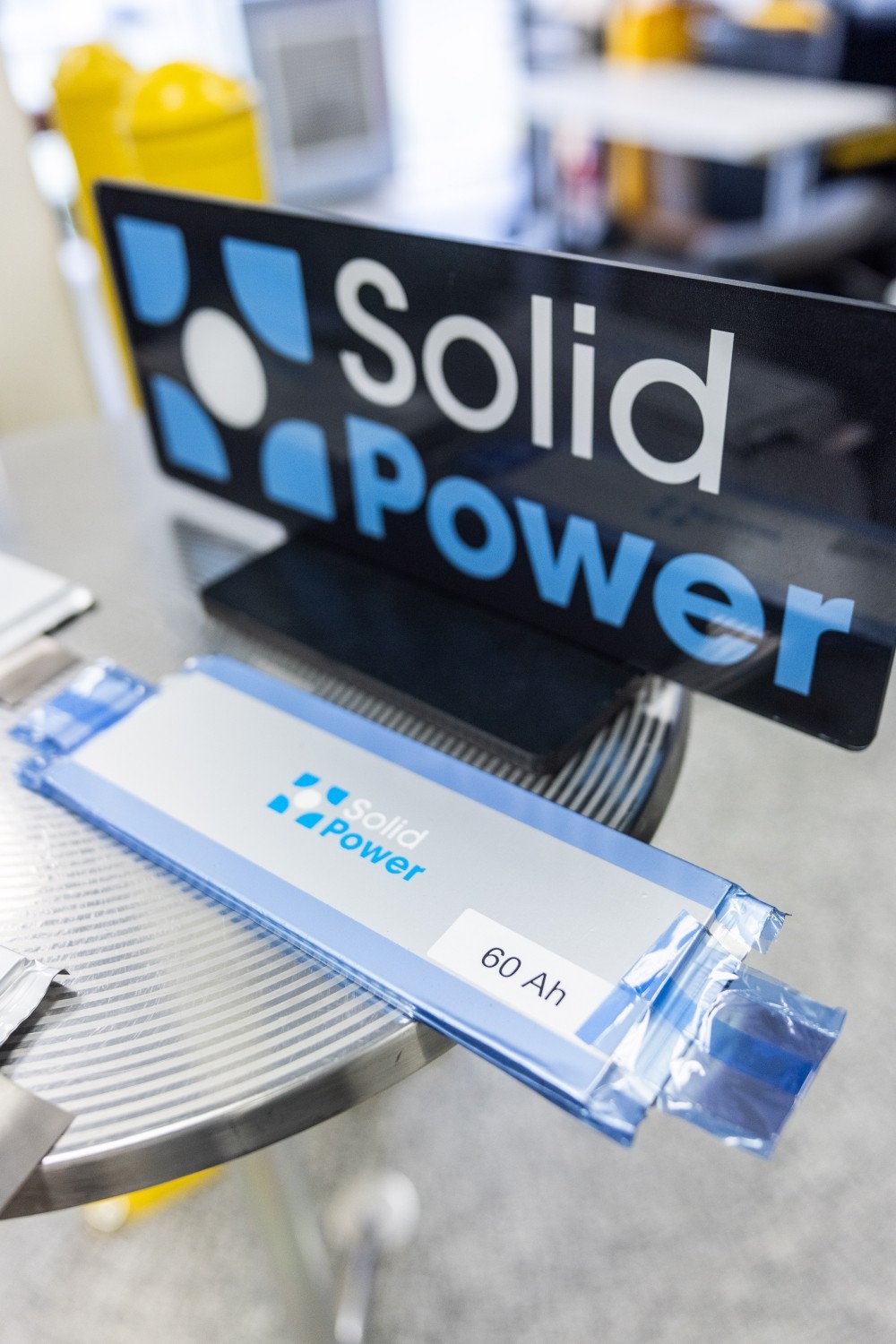
What are solid-state batteries?
Unlike traditional batteries, which use a flammable liquid as electrolyte, solid-state ones employ a solid material that conducts ions. This change improves safety and allows more energy to be stored in less space. Butenko et al. (2026) describe how the chemistry, structure and transport capacity of solids are the pillars that make this revolution possible.
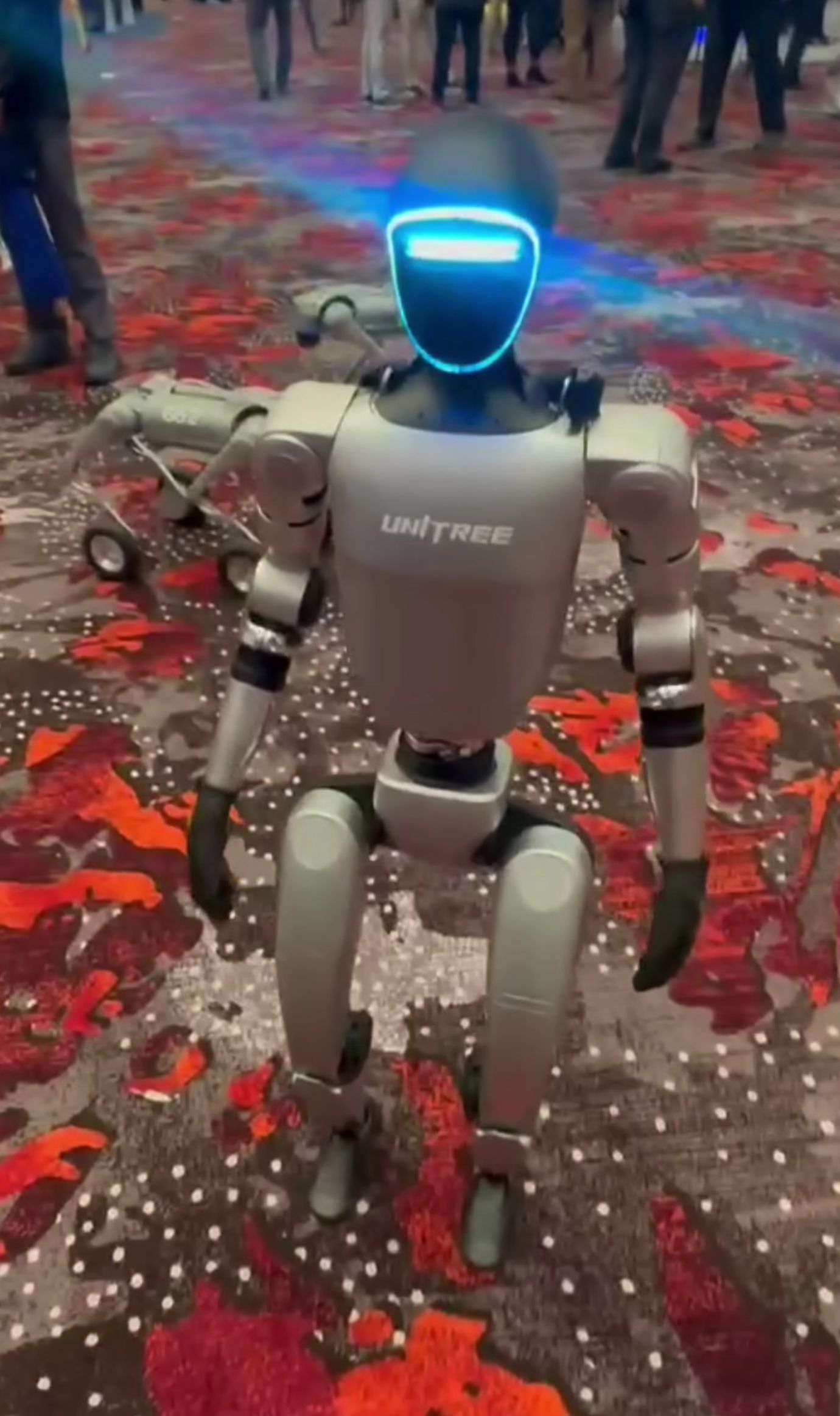
Why do robots need them?
Mobile and humanoid robots consume a lot of energy to move their joints and process data. A study by Deniz et al. (2026) shows that modeling the electric consumption of a humanoid arm helps predict how long the battery will last on a specific task. Moreover, Huang et al. (2026) demonstrate that, using reinforcement learning, robots can plan their gait to expend the least possible energy, but everything depends on having an energy source that does not run out quickly. Today, a humanoid like the Unitree G1, with its 9,000 mAh battery, runs about two hours per charge according to the manufacturer’s official data (Unitree Robotics, 2026), still far from a full work shift.
In short, a denser and safer battery means longer operation time, less weight and, therefore, more agile and useful robots.
Robotics accelerating electrolyte discovery
Discovering new solid materials is not easy; there are thousands of possible combinations. Dave et al. (2019) showed that robots equipped with automated experiments and machine-learning algorithms can explore this vast chemical space much faster than traditional labs. It is like having a robot chef that tests infinite recipes until it finds the perfect one for a battery.
This approach speeds the arrival of more conductive and stable electrolytes, bringing solid-state batteries closer to mass production.
Challenges and the future of solid-state-powered robots
Although the promise is great, challenges remain. Massaro et al. (2025) point out that solid-state sodium batteries still need to improve their cycle life and performance at low temperatures. On the other hand, Li et al. (2026) warn that, in fleets of autonomous robots, the health of each battery must be managed intelligently to avoid unexpected failures.
Combining more robust batteries with management systems that learn from each use will be key for robots to operate uninterrupted for weeks.
Conclusion
Solid-state batteries promise to give robots the autonomy we have always wanted. Thanks to robotics that is already discovering electrolytes and to algorithms that optimize their consumption, the next energy revolution is just around the corner. When these batteries enter production, we will see safer, lighter robots capable of accompanying us in everyday tasks without us worrying about charging.
Key takeaways
- Solid electrolytes increase battery safety and energy density.
- Robots can accelerate the discovery of new materials through automated experimentation and AI (Dave et al., 2019).
- Electrical consumption models and reinforcement learning enable robots to use energy more efficiently (Deniz et al., 2026; Huang et al., 2026).
- Managing battery health at the fleet level is essential for continuous operations (Li et al., 2026).
Sources
- Unitree Robotics (2026). Unitree G1: humanoid robot — https://www.unitree.com/g1/
- Dave, A. et al. (2019). Autonomous discovery of battery electrolytes with robotic experimentation and machine-learning — https://arxiv.org/abs/2001.09938
- Butenko, D. et al. (2026). Modern Solid Electrolytes for All-Solid-State Batteries: Materials Chemistry, Structure, and Transport — https://arxiv.org/abs/2604.17380
- Massaro, A. et al. (2025). Advancements in Solid-State Sodium-Based Batteries: A Comprehensive Review — https://arxiv.org/abs/2505.04391
- Deniz, N. N. et al. (2026). Identification of a Physics-Based Electrical Power Consumption Model for the Unitree G1 Humanoid Arm — https://arxiv.org/abs/2606.15915
- Huang, W. et al. (2026). ECO: Energy-Constrained Optimization with Reinforcement Learning for Humanoid Walking — https://arxiv.org/abs/2602.06445
- Li, J. et al. (2026). Fleet-Level Battery-Health-Aware Scheduling for Autonomous Mobile Robots — https://arxiv.org/abs/2603.22731