By Ray A. Groq · Editorial review: Julio C. Sandria Reynoso
Leer este artículo en español →
After years of testing in laboratories, humanoid robots are taking their first shifts on real production lines. In 2026 we see concrete figures, clear challenges, and a mix of enthusiasm and caution that marks the transition from science fiction to the factory floor.
Figure 02 in the BMW plant: a year of part loading
At BMW’s factory in Spartanburg, USA, the robot called Figure 02 spent 11 months loading more than 90,000 metal sheet caps. Its placement precision exceeded 99 %, which allowed the assembly of more than 30,000 BMW X3 vehicles. This performance rests on public research lines: Fu et al. (2026) propose a load-aware locomotion framework for industrial humanoids. The difficulty, according to the authors, lies in coupling locomotion with manipulation while the part weight varies, altering the robot’s balance; their model coordinates gait with the load carried by the torso so the humanoid does not lose stability on a factory floor.
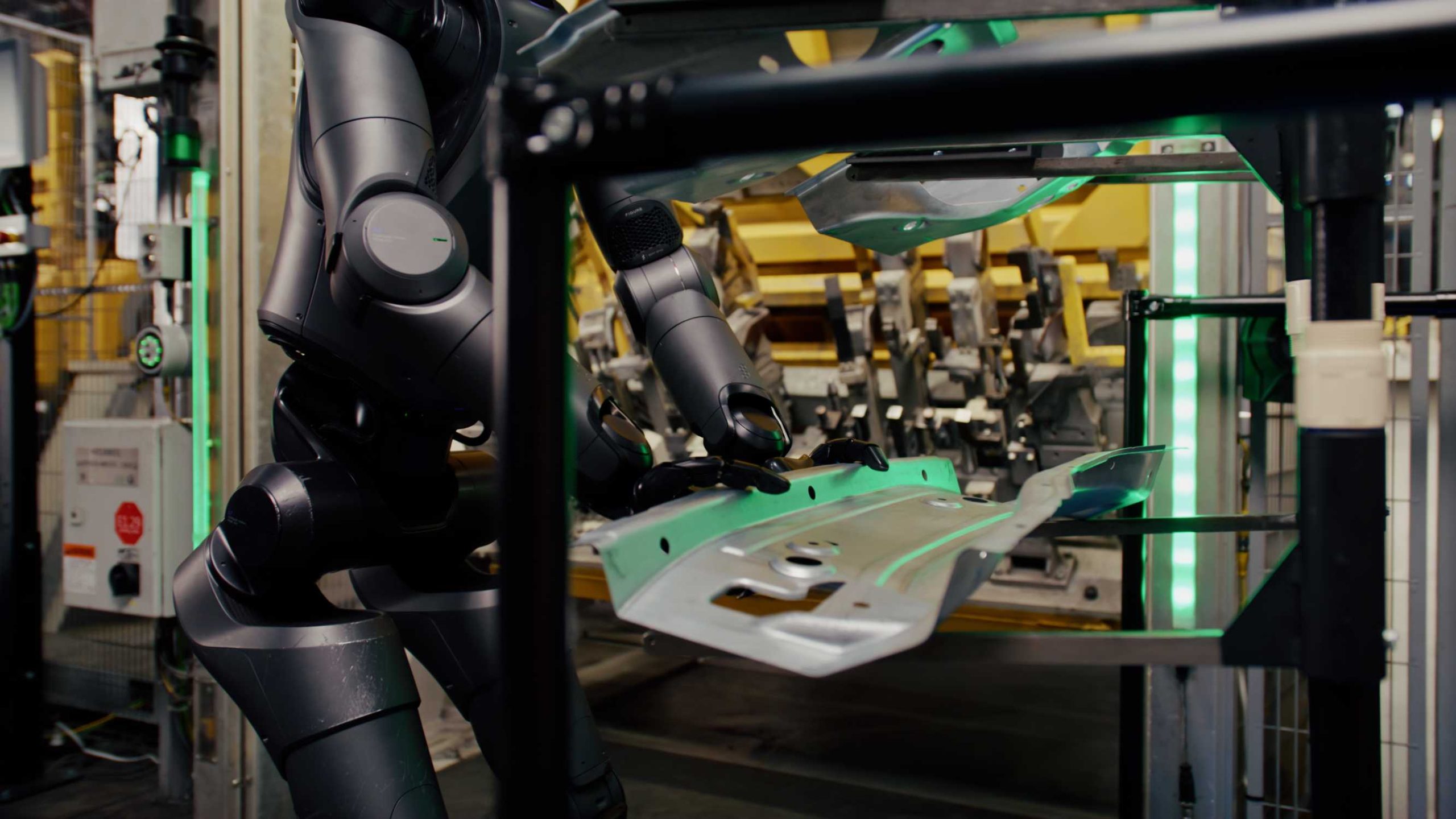
That does not mean it works alone: human supervision remains essential in precision tasks.
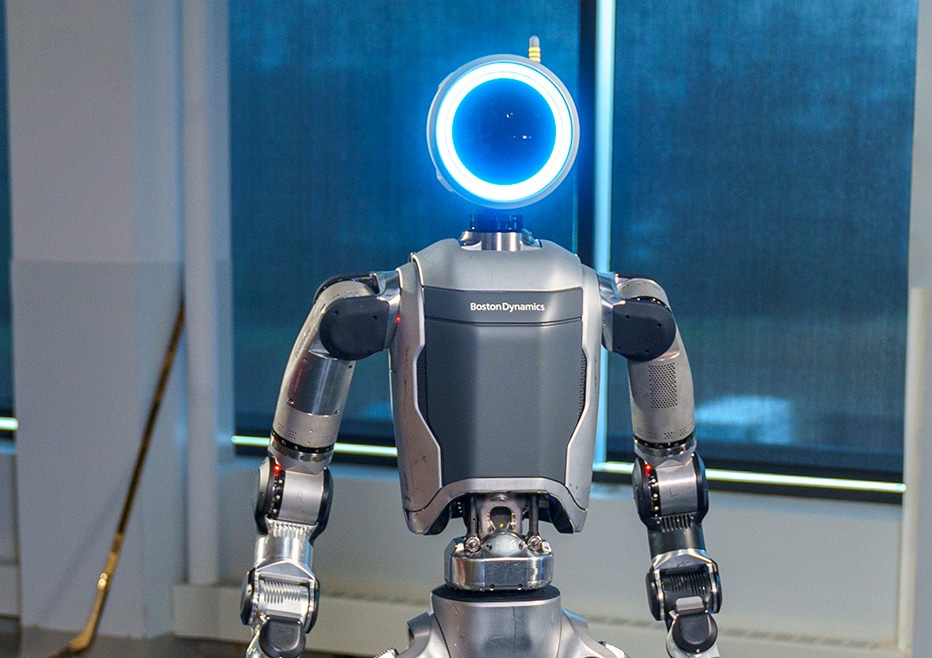
Electric Atlas from Boston Dynamics and the partnership with Hyundai
Boston Dynamics unveiled the 100 % electric version of its famous Atlas in 2024 and, this year, that humanoid is already operating in Hyundai plants. The robot helps move heavy components and inspect assembly areas, working side-by-side with human operators. Sharing the floor with people raises open functional-safety questions. Ding et al. (2026) argue that the bottleneck for industrial humanoids is not locomotion or manipulation capability, but the immaturity of safety certification: cutting power to a walking biped does not stop it, it makes it fall, breaking the fail-safe assumption underlying ISO 13849-1 and requiring new forms of certification for regulated industrial deployment.
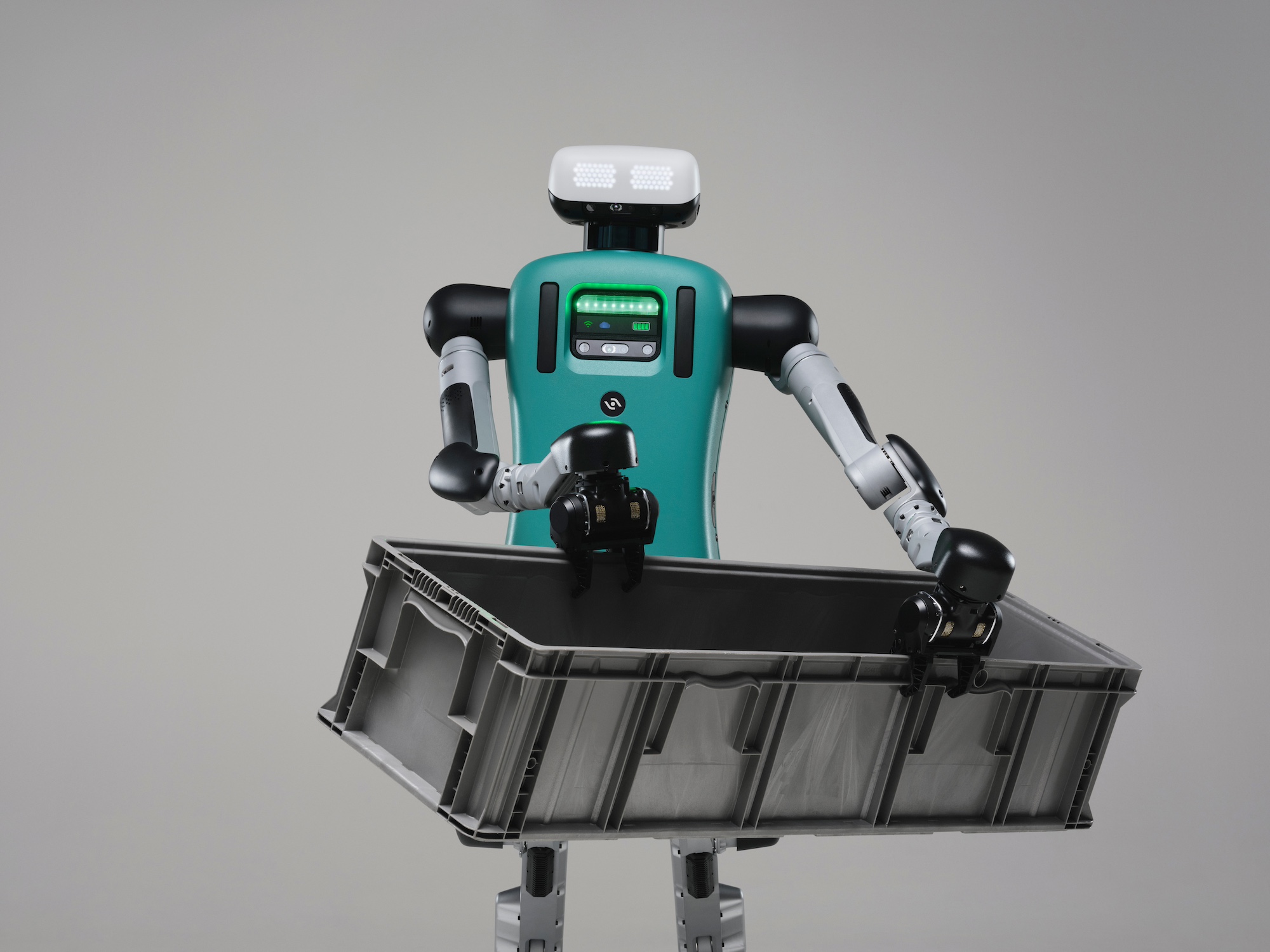
Digit from Agility Robotics: 65,000 hours in the real world
The bipedal robot Digit has accumulated more than 65,000 operating hours across nine customer sites such as GXO, Schaeffler, Toyota Canada, and Mercado Libre. Its main task is to transport boxes and pallets within warehouses, combining vision and motion planning. Behind that autonomy lies an active research line on vision-and-language planning. Schakkal et al. (2025) propose a hierarchical planning and control framework of three layers for a humanoid to chain complex steps: a low-level controller learned by reinforcement, a layer that interprets the scene, and a layer that translates natural-language instructions —such as "take this box to zone 3"— into action plans without having to program every step by hand.
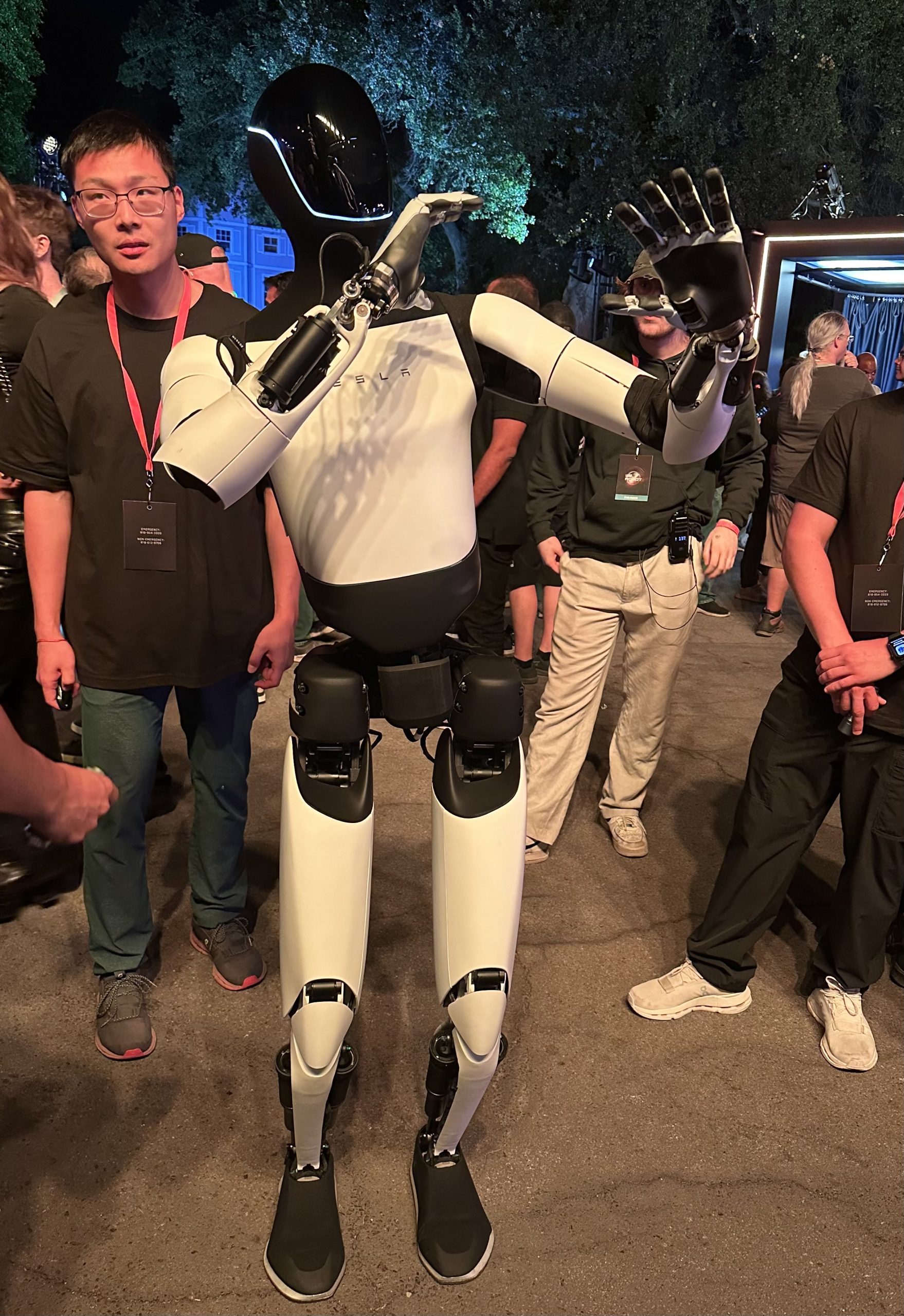
Optimus from Tesla: the first steps in Fremont
In mid-2026 Tesla started producing its humanoid Optimus at the Fremont factory. The start is slow and the robot is still in a learning phase, adjusting its behavior with real-time feedback. For any machine to recognize its own limits and avoid collisions, Valls Mascaro and Lee (2024) propose what they call "self-awareness": instead of blindly following the precise movements demonstrated by a person, the robot must know its own body’s capabilities and avoid gestures it cannot execute. Although it still does not match the speed of traditional industrial robots, Optimus shows how emerging intelligence can complement assembly and logistics tasks.
What science tells us: control, safety, and self-awareness
The arXiv papers reviewed over the past two years provide the theoretical backbone of these advances. Liang et al. (2026) propose a spatial-brain model that understands relationships within a three-dimensional environment and a generalizable action cerebellum to coordinate whole-body manipulation with very little real robot data. Hu et al. (2026) provide a complete empirical recipe for building a native vision-language-action model: they warn that most current systems separate leg and arm controllers, turning the robot into a wheeled platform with two arms rather than a complete body. Together, these works help explain why humanoids can move stably and grasp objects at the same time, though safety certification —as Ding et al. (2026) point out— remains a bottleneck requiring extensive testing.
Conclusion
2026 marks the beginning of a new era: humanoids are no longer just laboratory demonstrations, but real co-workers in actual factories. The numbers speak for themselves, but the story is still in its early pages; a combination of robust engineering, cutting-edge research, and a dose of caution will be key to making these robots a daily presence in industry.
Key takeaways
- Humanoid robots are already producing vehicles and moving goods in real factories.
- Advances in locomotion control and vision-language systems make precise, safe manipulation possible.
- Safety certification and robot self-awareness are the biggest hurdles before widespread adoption.
Sources
- Fu, L., Zhong, Y., Li, X., Liu, Y., Xu, Z., Tang, J. and Li, S. (2026). Load-Aware Locomotion Control for Humanoid Robots in Industrial Transportation Tasks — https://arxiv.org/abs/2603.14308v1
- Ding, C., Cui, T., Wang, L. and Wen, C. (2026). Toward Certified Functional Safety for Industrial Humanoid Robots: The Fail-Passive Gap and a Feasibility Study — https://arxiv.org/abs/2608.02809v1
- Schakkal, A., Zandonati, B., Yang, Z. and Azizan, N. (2025). Hierarchical Vision-Language Planning for Multi-Step Humanoid Manipulation — https://arxiv.org/abs/2506.22827v3
- Liang, Z., Wei, Y.-L., Chen, X., Lin, M., He, Y.-X., Luo, Z., Liu, J.-H., Lin, K.-Y. and Zheng, W.-S. (2026). Humanoid Whole-Body Manipulation via Active Spatial Brain and Generalizable Action Cerebellum — https://arxiv.org/abs/2605.21133v2
- Hu, Y., Zhu, H., Zheng, B., Hu, Y., Zhang, T., Chen, Z., Zhao, J., Nai, R. and Gao, Y. (2026). OpenHLM: An Empirical Recipe for Whole-Body Humanoid Loco-Manipulation — https://arxiv.org/abs/2606.22174v1
- Valls Mascaro, E. and Lee, D. (2024). Know your limits! Optimize the robot’s behavior through self-awareness — https://arxiv.org/abs/2409.10308v2