
By Ray A. Groq · Editorial review: Julio C. Sandria Reynoso
Leer este artículo en español →
From the earliest mechanical calculations to algorithms that can create art, artificial intelligence (AI) has traveled a path full of human curiosity and technological advances. In this article we break down, with simple words and everyday analogies, how the ideas that today power virtual assistants and autonomous cars originated. Join us through centuries of discoveries, from the balance diagrams of the 17th century to neural networks that learn like our own brain.
The First Mechanical Dreams
Imagine a 17th‑century craftsman drawing the shape of an apple spinning in the air to understand its balance. That kind of reasoning, documented by Iurato (2014), shows how scientists began to model reality with precise mathematics, creating “balance figures” that predicted physical behavior. Although they did not speak of “artificial intelligence,” they were already using formal logic to solve problems. Later, in the 20th century, philosophers and scientists began to ask whether a machine could imitate human reason. The Stanford Encyclopedia of Philosophy (n.d.) notes that AI pioneers such as Alan Turing raised the possibility that a machine could follow instructions and learn from experience, planting the seed of what we now call AI.
The Revolution of Algorithms and Computing
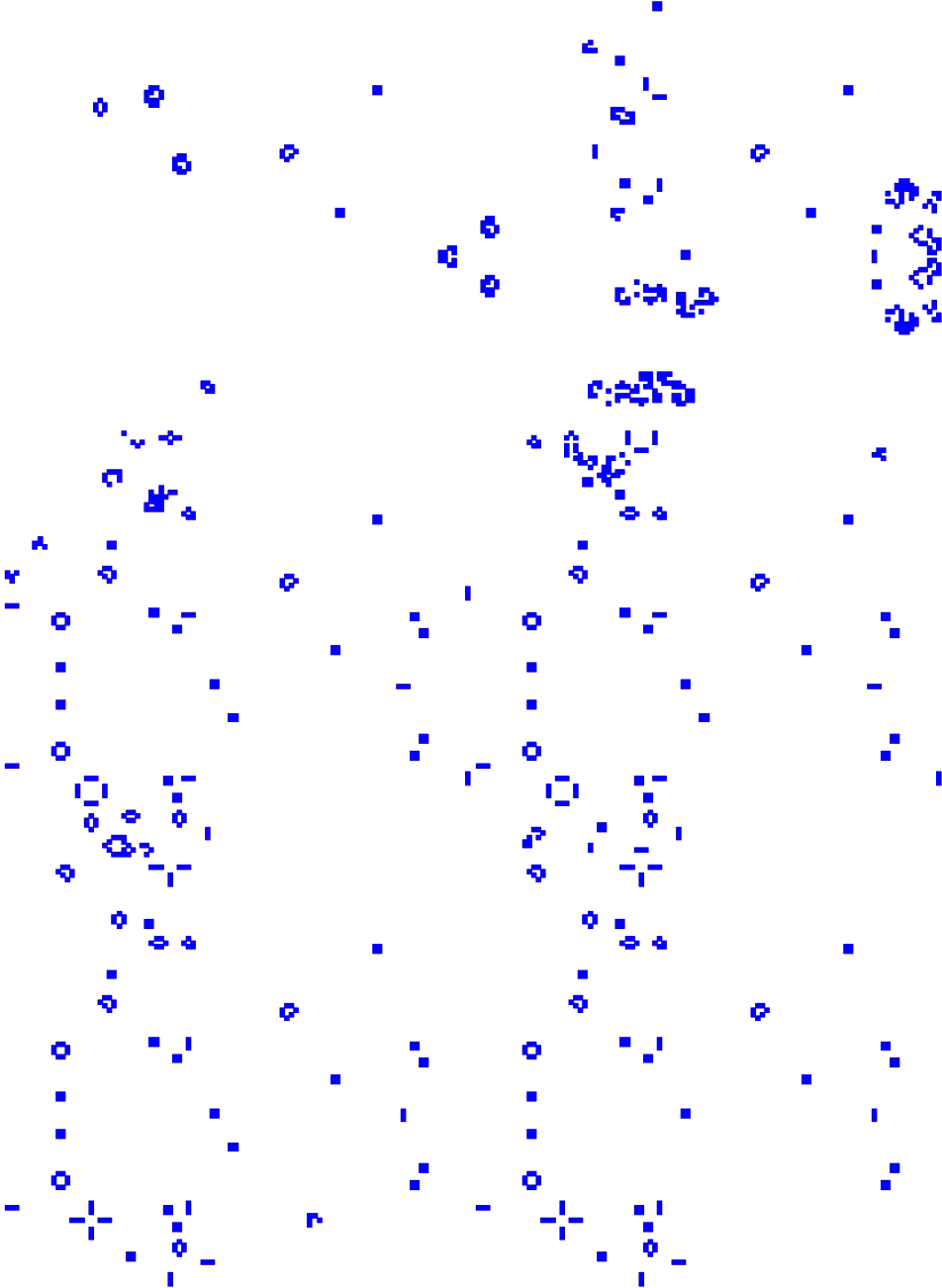
With the arrival of the first computers, the dream of a thinking machine ceased to be merely theory. The earliest programs, such as Conway’s famous “Game of Life,”, demonstrated that simple rules could generate complex patterns, an idea that resonated with the early AI debates described in the Stanford Encyclopedia (n.d.). At the same time, instrumental science was advancing: Thompson (2013) recounts how the development of the nebular spectrograph allowed astronomers to process enormous amounts of luminous data, setting a precedent for automated analysis. These machines, although rudimentary, showed that algorithms could handle information at a scale beyond human capability, preparing the ground for the more sophisticated systems that would follow.
The Rise of Deep Learning
If the first computers were like giant calculators, neural networks are like miniature brains. Schmidhuber (2014) describes how, starting in the 1980s, researchers combined layers of artificial neurons so that they could learn patterns on their own, a process called “deep learning.” Think of a stack of coffee filters: each layer retains the essential and discards the superfluous, until the final filter delivers a perfect cup. Thanks to massive data volumes and powerful graphics cards, these networks began to recognize voices, translate languages, and diagnose diseases with astonishing accuracy. Schmidhuber’s (2014) article emphasizes that this leap was not only technical but also conceptual: AI stopped following fixed instructions and began discovering its own rules.
AI in Contemporary Culture and Science
Today AI is not only in laboratories; it is in libraries, museums, and telescopes. Vogler et al. (2023) present contrastive attention networks that help attribute impressions of printed books from the 17th century, demonstrating that AI can unravel historical mysteries with the precision of a digital detective. In physics, Barandes (2026) discusses how debates about the reality of the wave function are enriched by computational models that simulate quantum scenarios, showing that AI also becomes a tool for exploring the limits of reality. These applications illustrate that AI, like a universal translator, connects disciplines as disparate as art history and quantum mechanics.
Conclusion
From the balance diagrams of the 17th century to neural networks that learn like us, artificial intelligence has been a story of questions, tests, and collaborations across disciplines. Each step, driven by the need to understand and manipulate data, has turned AI into an omnipresent tool that continues to redefine what it means to be intelligent. Looking to the future, we can expect this conversation between humans and machines to keep evolving, opening doors we have not even imagined yet.
Key takeaways
- The earliest mathematical balance models laid the foundations of algorithmic thinking.
- The first computers and data‑analysis algorithms demonstrated the potential of automation.
- Deep learning revolutionized AI by allowing machines to discover their own rules.
- Current AI applications connect fields as diverse as art history and quantum physics.
Sources
- Schmidhuber, J. (2014). Deep Learning in Neural Networks: An Overview — https://arxiv.org/abs/1404.7828
- Artificial Intelligence (Stanford Encyclopedia of Philosophy) — https://plato.stanford.edu/entries/artificial-intelligence/#His
- Iurato, G. (2014). The dawning of the theory of equilibrium figures: a brief historical account from the 17th through the 20th century — https://arxiv.org/abs/1409.3858v2
- Vogler, N. et al. (2023). Contrastive Attention Networks for Attribution of Early Modern Print — https://arxiv.org/abs/2306.07998v1
- Thompson, L. A. (2013). V.M. Slipher and the Development of the Nebular Spectrograph — https://arxiv.org/abs/1301.7331v1
- Barandes, J. A. (2026). Historical Debates over the Physical Reality of the Wave Function — https://arxiv.org/abs/2602.09397v1