
By Ray A. Groq · Editorial review: Julio C. Sandria Reynoso
Leer este artículo en español →
Nowadays algorithms decide everything from medical diagnosis to the content we see in class. But how can we trust a decision if we don’t know what motivated it? Explainable AI (XAI) gives us that window into the model’s interior, turning the “black box” into a clear, human conversation.
Trust and transparency: the first step
When a model predicts that a customer will churn, how can we know whether the reason is genuine or a hidden bias? Ribeiro et al. (2016) showed that techniques such as LIME can describe, in plain language, which features influenced each prediction, helping the user decide whether to trust it or not. Similarly, Akula et al. (2019) proposed X‑ToM, an approach inspired by theory of mind that generates explanations that feel natural to people, creating a justified basis of trust.
Critical decisions in health and education
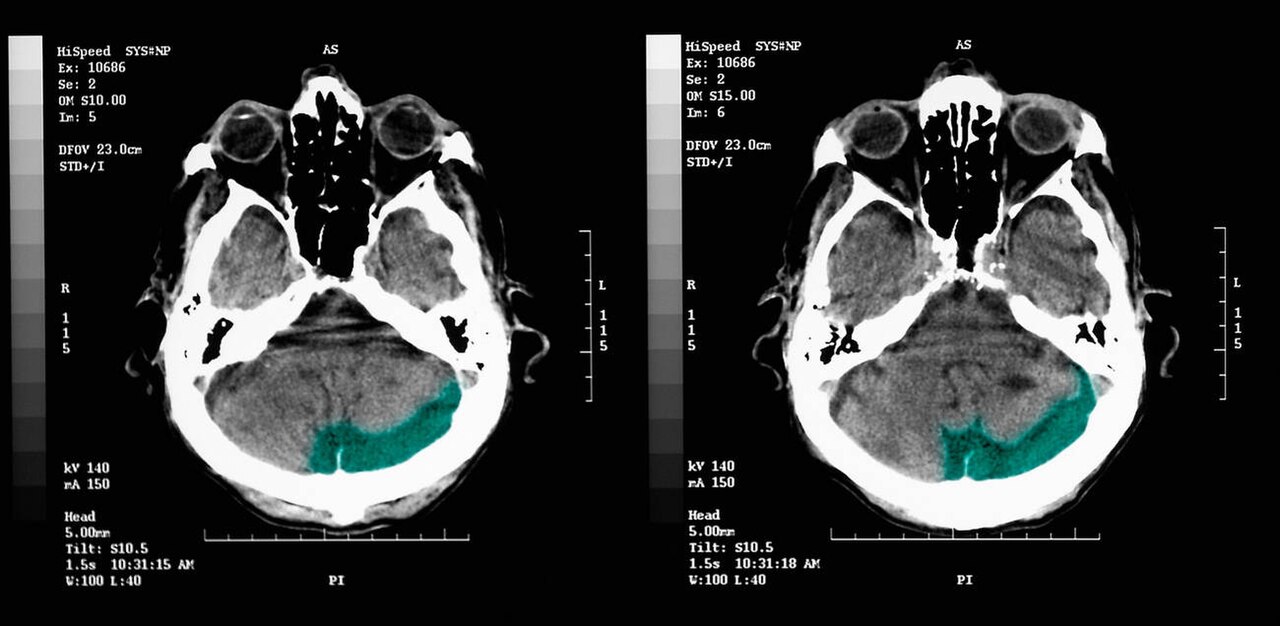
In imaging diagnosis, physicians need to know why an AI flags a lesion. Wagner and Schlippe (2026) found that professionals prefer explanations that highlight relevant regions of the image and use familiar language, which reduces uncertainty and speeds adoption. In the classroom, Manna and Sett (2024) argue that xAI allows students and teachers to understand how learning recommendations are generated, fostering more personalized education and avoiding blind reliance on technology.
From the black box to the toolbox
Language models often seem to guess answers without visible logic. Sheth et al. (2021) integrate structured knowledge, such as semantic graphs, so that AI can “explain” its reasoning as if consulting an encyclopedia. In the case of tabular data, Rossberg et al. (2025) introduced a comprehensibility scale that measures how easy it is for a person to interpret the importance of each variable, turning raw numbers into accessible stories.
How to build useful explanations
A good explanation is not just a list of numbers; it must connect with the user’s context. The authors agree that clarity, relevance, and brevity are key. For example, combining simple visualizations with everyday analogies (such as comparing the influence of a feature to the weight of an ingredient in a recipe) allows anyone, without technical training, to understand why the model made its decision.
Conclusion
Understanding what an AI thinks is not a luxury, it is a necessity. From patient trust to student acceptance, explanations turn the power of algorithms into responsible, human tools.
Key takeaways
- Explanations increase trust and reduce hidden biases (Ribeiro et al., 2016).
- In critical fields such as health and education, xAI clarity is decisive for adoption (Wagner & Schlippe, 2026; Manna & Sett, 2024).
- Integrating external knowledge and measuring comprehensibility helps make explanations truly useful (Sheth et al., 2021; Rossberg et al., 2025).
Sources
- Ribeiro, M. T. et al. (2016). “Why Should I Trust You?” — https://doi.org/10.1145/2939672.2939778
- Manna, S. and Sett, N. (2024). Need of AI in Modern Education: in the Eyes of Explainable AI (xAI) — https://arxiv.org/abs/2408.00025v3
- Wagner, J. and Schlippe, T. (2026). A User-Centric Analysis of Explainability in AI-Based Medical Image Diagnosis — https://arxiv.org/abs/2605.02903v1
- Sheth, A. et al. (2021). Knowledge-intensive Language Understanding for Explainable AI — https://arxiv.org/abs/2108.01174v1
- Akula, A. R. et al. (2019). X-ToM: Explaining with Theory-of-Mind for Gaining Justified Human Trust — https://arxiv.org/abs/1909.06907v1
- Rossberg, N. et al. (2025). The Feature Understandability Scale for Human-Centred Explainable AI: Assessing Tabular Feature Importance — https://arxiv.org/abs/2510.07050v2